

Early Learning
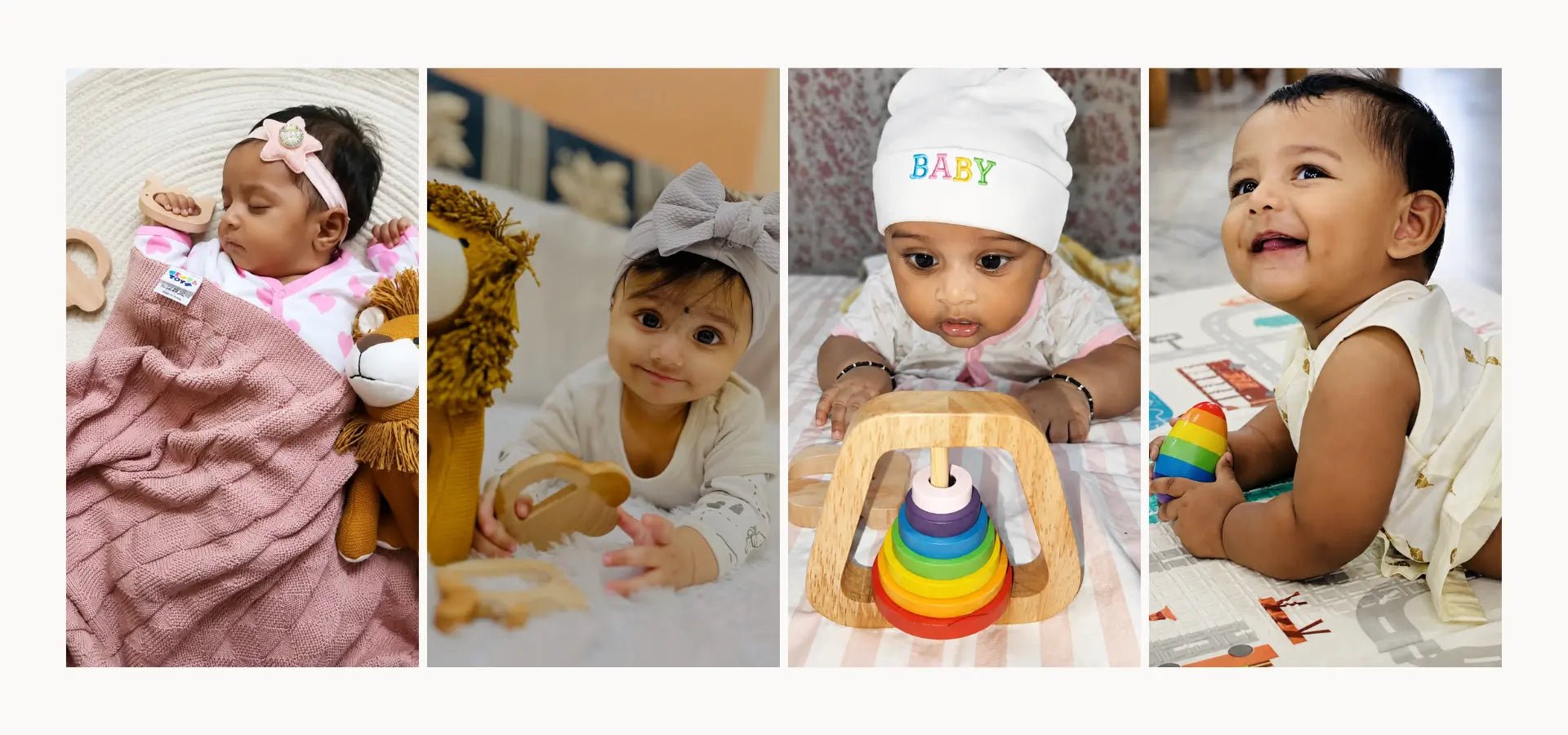

Montessori Toys by Age: How to Choose Montessori-Inspired Toys for Different Stages
A lot of parents see "Montessori" printed on a box and assume that settles the question, either it's Montessori or it isn't. But even once a toy genuinely fits the philosophy, a second question matters just as much: is this the right moment for this particular child? We've covered what actually makes a toy Montessori elsewhere, child-led, hands-on, one clear purpose. This guide picks up from there and looks at something slightly different, how age, readiness, and interest work together when you're actually standing in front of a shelf trying to decide. The short version: the same toy can mean something completely different to a child at eighteen months versus five years old. What to Actually Look For, Regardless of Age A Montessori-inspired toy should give a child something to genuinely do, explore, adjust, repeat, rather than something to simply watch happen. A few things matter more than the label: One clear purpose, not five features competing for attention Enough challenge to be interesting, not so much that it's frustrating Room to repeat the activity as many times as the child wants A real chance at independent use once it's been shown once Some connection to an actual, everyday task where possible Safe, sturdy construction that can survive being handled constantly Keep this list in your head as you go through the ages below. It matters more than any number does. Around the First Year Babies at this stage are mostly working with their hands and eyes, grasping, reaching, watching something happen and trying to make it happen again. Simple sensory materials and cause-and-effect toys tend to fit well here, things a baby can grab, mouth safely, and trigger on their own. Safety carries extra weight at this age. Pieces need to be too large to swallow, construction needs to hold up to being dropped and gnawed on, and supervision matters more than independence right now. A sensory bin set with a Montessori tray is a reasonable example of the category, simple movement and touch, nothing that needs explaining twice. One to Two Years This is usually when stacking, sorting, and posting things into holes becomes genuinely fascinating. Simple puzzles and basic practical-life activities, like pouring water between two small cups, often click into place here too. What tends to hold attention: repetition, small choices, and tasks that reward a bit of hand-eye coordination without demanding too much of it. Something like a circle seriation puzzle, sized correctly for small hands, fits the pattern well. Not every child at this age is ready for the same complexity, some are still deep in stacking mode, others are already sorting by size on their own. Two to Three Years Puzzles get a bit more involved. Matching and sorting start to feel purposeful rather than random. Building blocks show up more seriously, and simple practical-life play, like pretend food preparation, often becomes a daily fixture. A pounding bench works well around here too, cause and effect, repetition, and a satisfying bit of physical effort all in one activity. Children at this stage tend to gravitate toward the same handful of activities over and over, which is normal, not a sign anything's wrong. Repetition is often the whole point. Three to Four Years Puzzles get genuinely more challenging. Building starts turning into actual construction rather than stacking. Counting and simple manipulation activities enter the picture, alongside classification tasks, sorting by more than one property at once, for instance. A chopping board and knife set fits naturally here, real practical-life skill, safely scaled down, that many kids this age are genuinely eager to try. Independence tends to expand quickly around this stage. A child who needed help with everything six months ago may suddenly want to do most of it alone. Four to Five Years More complex construction. Pattern and sequencing activities. Early number concepts woven into hands-on play rather than worksheets. Practical-life tasks often get more elaborate too, closer to genuinely helping than pretending to. A wooden shape-sorting clock is a decent example of where this stage tends to head, sequencing, early number sense, still entirely hands-on. This isn't about starting school early. It's just that hands stay busier and more capable as they get older, and materials can keep pace with that. Five and Up Building gets more ambitious. Strategy and problem-solving games start to genuinely interest kids at this stage, alongside advanced puzzles and creative construction projects that might take more than one sitting to finish. Independent projects become realistic here too, something a child can pick up, work on for a while, set aside, and return to later without needing an adult to restart it. The core Montessori principles, hands-on, independent, appropriately challenging, don't change. What changes is how much complexity a child can genuinely handle inside that framework. The Same Toy Can Mean Something Completely Different Later Here's a genuinely useful thing to know before buying anything: a good Montessori-inspired toy doesn't necessarily need replacing as a child grows. It just gets used differently.Take wooden building blocks. A younger child mostly grasps, carries, and stacks them, simple exploration, nothing more complicated. An older child using the exact same set starts planning structures, testing balance, solving small problems when something falls over. The blocks never changed. Only the child's way of using them did. This is really the strongest argument for buying fewer, better pieces rather than replacing toys every few months. If you're building out a collection with this in mind, wooden building blocks are a solid place to start, since they genuinely stretch across several years rather than one narrow window. A Quick Way to Check If a Toy Actually Fits Before buying, run through this: Does it match what my child can currently do, not just their age? Is there enough challenge here to stay interesting for a while? Can my child use it on their own after being shown once? Does it invite hands-on exploration, not passive watching? Can it be repeated as many times as the child wants? Does it match something they're already drawn to? Is it sturdy enough to survive being handled constantly? Will it still make sense to them in six months, just used differently? If most of these come back yes, it's very likely a good fit, regardless of what the box says about age. Does Age Even Matter Here? It's a useful starting point, but it shouldn't be the only thing deciding your choice.Two children can share a birthday and be in completely different places. One might find a puzzle far too easy. Another might just be starting to work it out. Age gets you into the right neighborhood. It doesn't tell you which house to knock on. A better question than "what age is this for" is usually "does this offer the next reasonable step for this specific child." That single shift in framing solves more gifting and buying dilemmas than any age chart ever will. Why Build Quality Still Matters Here Montessori materials get handled constantly, picked up, carried, dropped, repeated dozens of times in a single sitting. That kind of use puts real demands on construction. Smooth finishing, sturdy joints, and consistent pieces matter more here than they might for a toy that only comes out occasionally. We've covered the full quality checklist in detail in our buying guide, worth a look since everything there applies just as much to Montessori-inspired pieces. NESTA TOYS follows these same principles across its Montessori-inspired toys and educational toys collections, sturdy construction meant to survive years of exactly this kind of repeated, hands-on use. Choosing well was never really about matching a number on a box. It's about noticing what your child can already do, what still challenges them a little, and picking something that meets them right there. Do that consistently, and the same handful of well-made pieces can carry a child through several genuinely different stages, without needing to be replaced along the way. About the Author Neha Makdey is the Co-Founder & CEO of NESTA TOYS - India’s homegrown educational toy brand loved by over 3 lakh curious kids. NESTA Toys designs research-backed, hands-on learning toys for children aged 1–10, available on Amazon, Blinkit, Swiggy Instamart, and nestatoys.in. Follow NESTA TOYS on WhatsApp and Pinterest for free parenting resources and activity ideas. FAQs What are the best Montessori toys by age?It depends less on age alone and more on the child's current abilities and interests. Younger children tend to do well with simple sensory and cause-and-effect toys, while older kids often move toward puzzles, construction, and practical-life activities with more steps. What Montessori toys are good for toddlers?Simple stacking, sorting, and posting activities tend to work well, alongside basic practical-life tasks like pouring. The goal is repetition and independence, not complexity. What Montessori toys are suitable for a 2-year-old?Many two-year-olds enjoy building activities, simple puzzles, and pretend practical-life play, though the right level of challenge varies a lot between individual children. What Montessori toys are suitable for a 3-year-old?More involved puzzles, early construction, and classification activities often fit well here, alongside practical-life tasks that give a child a real, safely scaled-down task to complete. How do I choose a Montessori-inspired toy?Start with what the child can currently do rather than their age on paper. Look for one clear purpose, room for independent use, and enough challenge to stay engaging without becoming frustrating. Do Montessori toys need to be made of wood?No. Wood is common in Montessori design because it's simple and durable, but it's the philosophy behind a toy, child-led, purposeful, independent, that actually makes it Montessori. Can the same Montessori toy be used at different ages?Often, yes. Open-ended materials like building blocks tend to get used very differently as a child grows, simple stacking early on, more complex construction later, without needing to be replaced. What is the difference between Montessori and Montessori-inspired toys?"Montessori-inspired" is generally the more accurate term for toys sold commercially, since they draw on Montessori principles without necessarily coming from a certified Montessori source or classroom.
Learn more
Screen Time and Sleep in Toddlers: What Parents Should Know
Screens and sleep is one of the most searched parenting worries, but the actual research is more nuanced than most advice admits. This report walks through what studies, including a 2025 Indian study, really found, and what genuinely helps.
Learn more
Best Rakhi Gifts for Kids: Thoughtful Ideas for Brothers and Sisters
Raksha Bandhan has always been about the bond between siblings, but for a child, the day often comes down to one specific moment, untying the thread, and then unwrapping whatever comes next. That second part sticks with kids longer than most adults realize. The tricky part is that "thoughtful" and "expensive" aren't the same thing, and with so many children's products out there, it's easy to end up choosing something that looks impressive in a shop but barely gets touched at home. This guide is built to fix that, not with a long list to scroll through, but with a way to actually think about the child you're buying for. What Actually Makes a Rakhi Gift Good A good Rakhi gift fits the child in front of you, their age, what they're genuinely into, and how they like to play, more than it fits a trending list. A few things worth weighing before anything else: Age appropriateness, matched to what the child can safely and enjoyably handle right now Their actual interests, a child who's constantly building gets more out of a construction set than a puzzle picked at random Play style, some kids build, some pretend, some solve, some create, none of these are better than the others Whether it'll get used more than once, a toy that earns repeat play outlasts Rakhi day by months Construction and finish, since a gift handled by a curious child needs to hold up Whether it says something about the child specifically, not just about gifts in general None of this needs to be complicated. It's really just pausing before buying to ask, would this particular kid actually enjoy this. Choosing by Age, Without Treating It as a Rule Age ranges help narrow things down, but they're a starting point, not a verdict. Two five-year-olds can be in completely different places developmentally, and the box on the shelf has no way of knowing that. Around 0 to 2 years, simplicity wins. Sensory toys, easy-grip pieces, and gentle first introductions to pretend play tend to land best, with safety and supervision mattering more than complexity. Around 2 to 4 years, kids start imitating everyday life in earnest. Pretend play, simple puzzles, and early building toys give them room to copy what they see around them and experiment on their own terms. Around 4 to 6 years, play gets more elaborate. Building sets, creative activity kits, and open-ended toys work well here, mainly because they leave room for the child to decide what happens next. Around 6 to 8 years, complexity can go up a notch. Bigger builds, early STEM activities, and genuinely challenging puzzles tend to hold attention longer at this stage. 8 and up, kids often want a real challenge. Advanced construction, interest-specific STEM kits, and creative projects tend to fit best, especially anything tied to something the child already cares about. The one rule worth keeping in mind through all five stages: don't choose solely from the number on the box. A child's actual interests and current abilities matter more than the label. Age Group What to Consider Suitable Gift Categories 0-2 years Simplicity, safety, easy-grip pieces Sensory toys, simple stacking, gentle pretend play 2-4 years Imitation, early independence Pretend play, simple puzzles, early building toys 4-6 years Room to decide and create Building sets, creative kits, open-ended toys 6-8 years More complexity, longer focus Advanced building, STEM activities, challenging puzzles 8+ years Genuine challenge, personal interest Advanced construction, interest-based STEM, creative projects A Gift for a Brother Start with his age, and then with what he's actually into, not with assumptions about what boys tend to like. A child drawn to hands-on tinkering might light up over a proper Toolkit set, one of the most consistently popular picks across ages precisely because it's simple and open to imagination. A child who loves inventing stories might get far more out of a pretend play set. There's no single "boy gift," just a specific kid with specific interests, and the gift that matches those wins every time. A Gift for a Sister Exactly the same logic applies here, and it's worth saying plainly, since it usually doesn't. Building, puzzles, STEM, pretend play, creative kits, plush comfort toys, none of these belong to one gender over another. A sister who loves construction deserves a building set as much as any brother would. A soft, well-made plush companion, like one of the Knitted Cotton Soft Toy Doll, can be a genuinely meaningful gift too, for a child who's into imaginative, story-driven play, not because she's a girl, but because that's what she's drawn to. Different Kinds of Rakhi Gifts, and Who They Actually Suit Building and construction gifts suit kids who like creating things, testing ideas, and figuring out why something fell over. A younger builder often does best starting simple, something like a pounding bench with a hammer works well as a gentle first step into cause-and-effect building, while older kids graduate to full sets. Our wooden building blocks guide goes deeper into this if you want more. Pretend-play gifts work for kids drawn to role-play, storytelling, and copying everyday routines they've watched. A cooking or kitchen play set is a reliable pick here. More on why this kind of play matters in our pretend play guide. Puzzle gifts suit kids who enjoy visual challenges and the satisfaction of completing something. Keep the difficulty matched to age rather than ambition. Educational gifts fit kids who enjoy hands-on discovery and structured challenges. This is one useful category among several, not the default choice for every child. Our guide to choosing educational toys covers this in more depth if it's the direction you're leaning. Montessori-inspired gifts work for families who value independent, child-led exploration. Not every wooden toy qualifies as Montessori, the philosophy behind it matters more than the material, and our Montessori guide explains exactly what does. Creative DIY gifts, drawing, making, designing, suit kids who express themselves through building or crafting something entirely their own. Plush and comfort gifts matter for kids who lean into imaginative, story-based play or simply want something soft to hold onto. These aren't automatically educational, and that's fine, comfort and imagination are worth something on their own. Screen-Free Doesn't Mean the Only Option, Just a Solid One A hands-on gift won't erase screen time on its own, and it's worth not overselling that. What it does offer is something screens generally don't, active decisions, real conversation, physical hands-on effort. For families already working toward more screen-free time, a thoughtful toy is one genuinely useful piece of that picture. Our research on screen time in early childhood covers the actual evidence in more depth. Why Quality Actually Matters for a Gift Specifically A gift is a bit different from a toy a parent picks out carefully over weeks, it's often handled roughly, by an excited child who didn't choose it themselves and has zero patience for something that breaks on day two. Smooth finishing, sturdy joints, and safe materials matter here just as much as anywhere else, our buying guide covers the full checklist. NESTA TOYS designs its own collection with this in mind, sturdy construction and careful finishing meant to survive real, excited, occasionally rough play. Does a Rakhi Gift Need to Be Educational? Not really, and it shouldn't feel like homework wearing a bow. A good gift can simply be fun, imaginative, or comforting, learning can come along for the ride without being the entire point. A child shouldn't finish opening a gift and feel like they've just been handed an assignment. Making It Feel Personal Choose around a specific interest, cooking, animals, building, whatever it is for this particular child A short handwritten note turns even a simple gift into something that feels considered If there's a shared memory, something built together, a place visited, a related gift can echo it Something siblings can enjoy together tends to get more use than something built for solo play Think past Rakhi day itself, a gift that fits into everyday play afterward is the one that actually gets remembered If you're unsure what a child likes, ask their parents what they keep returning to during play. Their favorite type of play tends to be a far better gift guide than age alone. A Few Common Missteps Choosing purely by price, or purely by assumed gender preference, or grabbing the biggest, most impressive-looking box on the shelf, all common, all fixable. Before buying something new, it's worth thinking about what the child already has, sometimes the better gift adds a new kind of play rather than another version of what's sitting on the shelf already. And if you're buying for a child you don't see often, their parents usually know more about current interests than any generic list, this one included. Quick Checklist Before You Buy Age appropriate Matches the child's actual interests Safe and durable Good construction and finish Offers active, hands-on play Can be used repeatedly, not just once Appropriate level of challenge More than one way to play with it Feels chosen for this child specifically Once You Know What You're Looking For With age, interests, and play style narrowed down, browsing gets a lot easier. The NESTA TOYS Rakhi collection brings together options across ages and play styles in one place, worth a look once you've got a clearer sense of the child you're shopping for. The best Rakhi gift was never really the biggest or the trendiest one. It's the one that feels like it was picked with an actual kid in mind, their age, what they love, how they play, and maybe a small detail only their family would notice. That's what ends up remembered long after the thread comes off. About the Author Neha Makdey is the Co-Founder & CEO of NESTA TOYS - India’s homegrown educational toy brand loved by over 3 lakh curious kids. NESTA Toys designs research-backed, hands-on learning toys for children aged 1–10, available on Amazon, Blinkit, Swiggy Instamart, and nestatoys.in. Follow NESTA TOYS on WhatsApp and Pinterest for free parenting resources and activity ideas. FAQs What are good Rakhi gifts for kids in general?The best ones match the specific child, their age, interests, and how they like to play, rather than following a generic trending list. Building sets, pretend play, puzzles, and creative kits are all solid categories depending on the child. What's a good Rakhi gift for a brother?Start with his age and genuine interests rather than assumptions. A hands-on Toolkit or building set works well for kids who like tinkering, while a pretend play set suits a more story-driven child. What's a good Rakhi gift for a sister?The same logic applies, interests and age matter more than gender. Building, puzzles, creative kits, and pretend play all suit a sister just as well as a brother, depending on what she actually enjoys. What are good Rakhi gifts for toddlers?Simple, safe, easy-grip toys work best, sensory items, basic stacking toys, or a gentle introduction to pretend play, with safety and supervision mattering more than complexity. What are good Rakhi gifts for preschoolers?Pretend play sets, simple building toys, and early puzzles tend to work well, since kids this age are often imitating everyday life and experimenting more independently. Are educational toys good Rakhi gifts?They can be, but they're one category among several. A gift doesn't need to be explicitly educational to be meaningful, fun and imagination matter too. What makes a Rakhi gift meaningful rather than just another toy?Personal touches help, choosing around a real interest, adding a note, or picking something tied to a shared memory. Repeated play value also matters more than a high price tag. Are wooden toys a good choice for Rakhi gifts?Often yes, they tend to be durable and hold up to enthusiastic, sometimes rough play better than lighter alternatives. Construction quality matters more than material alone though. What should I consider when choosing a Rakhi gift for a child I don't see often?Their parents usually know more about current interests than a generic list. A quick check-in with them beats guessing based on age alone. Are screen-free toys good Rakhi gifts?Yes, as one part of a broader routine. They won't eliminate screen time on their own, but they do offer active, hands-on play that passive screen time doesn't.
Learn more
Wooden Building Blocks: How Building and Construction Play Helps Children Learn
A two-year-old stacks three blocks, watches them fall, and immediately starts again. No one asked them to. They're not following a plan. They're just curious about what happens when you put one thing on top of another. That's really where building blocks start earning their keep, not in the finished tower, but in everything that happens on the way there. This guide looks at what's actually going on during building play, and what to think about when choosing a set. What Wooden Building Blocks Actually Are A wooden building block set is exactly what it sounds like, individual pieces a child can stack, arrange, balance, and combine into something new. Different sets bring different shapes to the mix, arches, cylinders, triangles, simple rectangles, sometimes pieces built specifically for balancing. More pieces doesn't automatically mean more value, though. A smaller, versatile set often gets used in more different ways than a huge box a child never fully explores. Why Building Play Is Worth Taking Seriously Every few minutes during block play, a child is quietly deciding things. What should I build? Why did it fall? Which piece goes underneath this time?That's a meaningfully different experience than watching something happen. A child isn't observing here, they're the one making the calls. Build, notice, adjust, try again, that loop repeats constantly during a single session, without anyone directing it.Worth being honest about the limits too. Building blocks don't raise a child's IQ or guarantee anything about school later on, and that's worth being skeptical of if you ever see it claimed. What they do offer is a genuine, repeated chance to experiment and adjust, in a setting with basically zero stakes. What Kids Actually Practice While Building A falling tower is a small problem, and small problems are useful. Wider base, fewer blocks, different order, a totally different shape entirely, a child trying to fix a collapsed tower is testing possibilities, not following an answer key someone gave them. Above, below, wider, balanced, these ideas show up long before the words do. A child building a bridge has to figure out where the supports go and how much gap needs to stay between them. That's spatial thinking, worked out with hands rather than taught with vocabulary. Picking up a block and setting it down carefully takes more coordination than it looks like. Aligning pieces, adjusting a wobble, moving something without knocking over what's already built, all of it is quiet hand-eye coordination practice, repeated dozens of times an hour. Nothing about the blocks changes between Monday and Friday. What changes is the idea. Monday it's a house. Wednesday, a bridge. Friday, an entire city with roads running between buildings. Same set of blocks the whole week, completely different outcomes, because the child decided what they meant each time. Building something taller usually means thinking one step ahead, even briefly. "I need a wide base if I want this tall." No one needs to consciously plan like an adult here, the planning just shows up naturally the moment a structure gets ambitious enough to demand it. A structure falling down isn't really a failure, it's part of how the play works. Build, watch it fall, notice why, change something, rebuild. That loop is the actual mechanism, not a detour from it. Not every fallen tower needs rescuing. A house built for a toy animal often turns into a whole story by accident. A garage, a shop, a school, once building overlaps with pretend play, the structure stops being just a structure and starts being a setting. This connects naturally to pretend play more broadly, the two often blend without a child noticing the line between them. Area How Building Play Can Help Example Problem-Solving Gives a child a small, low-stakes problem to fix Widening the base after a tower falls Spatial Thinking Builds a working sense of how objects relate physically Figuring out gap width for a bridge Fine Motor Practice Repeated, controlled hand movements Carefully placing a block without toppling the tower Creativity Same pieces, endless different outcomes A house on Monday, a city by Friday Planning Thinking a step ahead as structures get ambitious Widening a base before building tall Persistence Practice at trying again after something doesn't work Rebuilding a collapsed tower differently Why "Open-Ended" Is the Whole Point An open-ended toy has no single correct way to be used. Blocks are about as clear an example as toys get, since the child decides what to build, how, whether to follow any plan at all, and what the finished thing actually represents. Here's the part worth sitting with. The same box of blocks becomes a completely different toy depending on who's holding it. A toddler stacks it. A preschooler builds a house with it. A seven-year-old turns it into an entire city with roads connecting every building. The product never changed. Only the child using it did.That's really the strongest argument for buying fewer, better pieces over a huge one-time haul, a good set keeps being useful for years, just in a different shape each time. Does Wood Actually Matter Here? Not automatically, and it's worth saying that plainly. Wooden blocks tend to have a sturdy, tactile feel and hold up to years of rough handling. Plastic blocks are usually lighter, easier to clean, and sometimes come with interlocking systems that let kids build more complex, stable shapes than loose wooden pieces easily allow. Neither one wins outright. What actually matters is the specific toy in front of you, safety, construction, finish, how stable the pieces are, and whether it genuinely fits how your child plays. For the fuller breakdown of what to check regardless of material, our buying guide covers this in depth. What Age Actually Fits Building Blocks Toddlers usually stick to stacking, carrying, and the occasional dramatic knock-down, simple exploration more than construction. Big, safe pieces and a bit of supervision matter more than complexity here. Preschoolers start building actual things, towers, houses, roads, often layered with a story on top. Early school-age kids push further still, planned cities, road networks, sometimes collaborative builds with a sibling or friend. The genuinely useful part is that one good set can carry a child through all three stages. Nothing about the blocks needs to change. The child's approach does that work on its own. Choosing Blocks Without Overthinking It A few things matter more than the rest. Age-appropriate piece size, especially for younger kids Stable, consistent shapes that stack predictably Smooth, splinter-free finishing Enough variety to build more than one kind of thing A size that actually fits your home, not just an impressive photo None of this means buying the biggest set available. Piece consistency and finish matter more day to day than sheer quantity, since a child handles, drops, and stacks these constantly, worn or uneven pieces get frustrating fast. For the fuller quality checklist that applies across any wooden toy, our buying guide covers it in detail. If you're not sure where to start, a versatile mixed-shape set, like the Wooden City Building Blocks (115 Pieces), tends to cover the widest range of builds without needing a second purchase right away. Building Blocks and the Montessori Connection Blocks fit comfortably into Montessori-inspired homes, hands-on, open-ended, and genuinely independent once a child gets going. That said, being wooden doesn't automatically make a set Montessori, the same way it doesn't for any other wooden toy. Montessori is a broader philosophy, not a material. If you want the fuller explanation, our Montessori guide covers exactly what does and doesn't count. Simple Ways to Stretch the Play Further Build the tallest tower that survives one more block on top Build a bridge a toy car can actually drive under Build a small city, one building at a time Build a shelter for a favorite toy animal Rebuild the exact same structure twice, differently each time Build together with a parent or sibling, no instructions given A challenge works better than an instruction. "Can you build something that stays up even with one more block?" leaves the child solving it their own way, rather than copying yours. Where This Fits Into Screen-Free Time Block play doesn't replace screens, and it's not trying to. What it offers is something screens generally don't, active decisions, physical hands-on effort, a structure that only exists because the child built it. For families working more screen-free time into a routine, building play is one genuinely useful piece of that, alongside whatever else already works. Our research piece on screen time in early childhood goes deeper into the actual evidence, worth reading if that's a topic on your mind. A Few Things Worth Watching For Buying based purely on piece count, expecting a child to copy an adult's design, or rebuilding a fallen structure for them before they've had a chance to try, all common, all fixable. The general fix is the same one, hold back a little, and let the child solve the small problem in front of them, even if it takes three attempts. One more worth naming. Assuming a pricier set is automatically the better one. Sometimes it is. Often the real difference is piece consistency and finish, not the number printed on the box. Quick Checklist Before You Buy Age appropriate Safe, smoothly finished pieces Sturdy, consistent shapes Enough variety for more than one kind of build Genuinely open-ended, not single-purpose Fits your child's current interests Likely to hold up for years, not months The real value in a set of blocks was never really in the finished tower. It's in everything that happened building it, the guessing, the failing, the small adjustment that finally worked. A good set of blocks can carry a child from their first wobbly stack all the way to an entire imagined city, all with the exact same pieces. NESTA TOYS builds its block sets with that stretch in mind, sturdy construction, consistent shapes, and finishing meant to survive years of actual use, not just a season. To browse a starting set, the Wooden Building Blocks Collection is worth a look, and for how building connects to pretend play and open-ended learning more broadly, Wooden Kitchen Toys and Educational Toys are natural next reads. About the Author Neha Makdey is the Co-Founder & CEO of NESTA TOYS - India’s homegrown educational toy brand loved by over 3 lakh curious kids. NESTA Toys designs research-backed, hands-on learning toys for children aged 1–10, available on Amazon, Blinkit, Swiggy Instamart, and nestatoys.in. Follow NESTA TOYS on WhatsApp and Pinterest for free parenting resources and activity ideas. FAQs Are wooden building blocks actually educational?They can create genuine opportunities to practice problem-solving, spatial thinking, and creativity, but the value comes from how a child plays with them, not from the blocks themselves. What skills do children actually practice with building blocks?Commonly, spatial thinking, fine motor coordination, early problem-solving, and creative thinking, all built through repeated, low-stakes experimenting rather than instruction. What age can kids start with building blocks?Many children begin simple stacking around 12 months. The same set typically stays relevant for years, since how a child uses it changes long before the blocks need replacing. Are wooden blocks better than plastic ones?Not automatically. Wood tends to feel sturdier and more tactile, plastic is lighter and sometimes allows more complex interlocking builds. Construction quality matters more than material alone. How do building blocks encourage creativity?The same set can become a house, a bridge, or a city depending entirely on what the child decides. That open-endedness is what drives the creative part, not any single feature of the toy. Do building blocks genuinely help with problem-solving?They give children small, repeated problems to work through, like a collapsing tower, which they solve through trial and adjustment rather than being told the answer. Are wooden building blocks Montessori toys?Some fit comfortably into Montessori-inspired play, since they're hands-on and open-ended, but wood alone doesn't make a toy Montessori. The philosophy behind it does. How many blocks does a child actually need?Fewer than most people assume. A well-chosen, varied set often gets used more creatively than a huge collection a child never fully explores. How can parents encourage building play without taking over?A simple challenge works better than instructions, asking "can you build something that survives one more block?" rather than showing a specific design to copy. Are building blocks good for screen-free play?Yes, as one part of a broader routine. They don't replace screens, but they do offer active, hands-on decision-making that passive screen time generally doesn't.
Learn more
How Everyday Play Supports Your Baby's Brain Development in the First Year
Your baby's brain is learning through everyday moments long before they can talk or play independently. Discover how simple interactions like talking, singing, tummy time and peekaboo support early brain development during the first year.
Learn more
Wooden Kitchen Toys: How Pretend Play Helps Children Learn Through Everyday Play
A parent stirs a pot on the stove. A minute later, their child is doing the exact same thing with an empty bowl and a spoon, deeply focused, completely serious about it. No one taught them to do this. They just watched, and then they copied. This is where wooden kitchen toys actually earn their place, not because a toy is labeled educational, but because it gives a child somewhere safe to recreate what they've already been watching. This guide looks at what's really happening during kitchen pretend play, and how to think about choosing a toy kitchen that actually supports it. What Counts as a Wooden Kitchen Toy At its simplest, a wooden kitchen toy is a child-sized version of familiar kitchen activity, a stove, some cookware, pretend food, a few utensils, built for a child to handle and imagine with. The educational value here has nothing to do with how many pieces come in the box. A child with three wooden utensils and an empty pot can build an entire imaginary restaurant. A child with forty accessories and no room to decide what any of it means often just moves pieces around without much happening underneath. What actually matters is whether the child gets to decide what the kitchen becomes. Why Pretend Play Actually Matters Pretend play isn't passive. Every few seconds, a child playing in a toy kitchen is quietly answering questions no one asked out loud. What am I making? What happens next? Who am I right now? Picture a child turning their kitchen into a restaurant. Suddenly there's a menu to invent, a customer to serve, a decision about what's for sale today, and a small crisis when the restaurant "runs out" of plates. None of that was scripted. It came from one child, one kitchen, and about ninety seconds of imagination. This is genuinely different from watching something happen on a screen. A screen decides what comes next. A kitchen doesn't, the child does. That distinction is really the whole point of pretend play, not that it's smarter or better, just that it asks something of the child that passive entertainment doesn't. Worth being careful here too. Pretend play doesn't raise a child's IQ or guarantee anything about school performance, and it's worth being skeptical of anyone claiming otherwise. What it does offer is a genuine chance to think, decide, and imagine, repeatedly, in a low-stakes setting. What Kids Actually Explore Through Kitchen Play Language comes out almost by accident. "I'm making soup. You have to wait, it's still cooking." That's one sentence from a three-year-old, and it's already doing a lot, naming an action, setting a scene, giving an instruction. Kitchen play tends to create a steady stream of small moments like this, opportunities to name, describe, and narrate, more than a guarantee of vocabulary growth on any fixed schedule. The same kitchen never tells the same story twice. One afternoon it's a bakery. The next, a busy café during the lunch rush. There's no single correct way to use it, which is really the definition of open-ended play. A kitchen doesn't get more creative because it has more pieces in the box. It gets more creative when the child has more room to decide what those pieces mean. Playing kitchen with someone else changes the game entirely. Sharing roles, waiting a turn to be the customer, negotiating who's cooking and who's eating, these are small, repeated practice runs at cooperating with another person. None of this happens automatically just because a kitchen set sits in the corner of a room. It tends to show up most when a sibling, friend, or parent actually joins in. Stirring, pouring, and scooping are doing more than they look like. Small, repeated hand movements, opening a lid, transferring a pretend ingredient from one bowl to another, "chopping" a pretend vegetable with something like a Montessori Chopping Board & Knife, all build the kind of fine motor control a child will eventually use for far less exciting tasks, like holding a pencil. Every pretend meal comes with a dozen tiny decisions. What ingredients do I need? What do I cook first? What happens if the restaurant runs out of plates? Kids solve these problems constantly during kitchen play, quietly and without anyone grading the outcome. None of this replaces actually helping in a real kitchen. A toy kitchen can build familiarity with sequences, prepare, serve, clean up, but it isn't a substitute for a child genuinely helping wash a bowl or set the table under supervision. The two work best alongside each other, not instead of one another. Area How Kitchen Play Can Help Example Language Gives children reasons to narrate, name, and describe "I'm making soup, it needs more salt" Imagination Same setup, endless different stories The kitchen becomes a bakery one day, a café the next Social Play Practice sharing roles and taking turns One child cooks, another orders and waits Fine Motor Practice Small, controlled hand movements Pouring, stirring, stacking plates Problem-Solving Small decisions made repeatedly "What do I serve first if I only have one pot?" Practical-Life Exploration Builds familiarity with everyday sequences Preparing, serving, then cleaning up after Does Wood Actually Make a Difference Here? Not automatically, and it's worth being upfront about that. A poorly made wooden toy isn't better than a well-made toy in any other material, just because of what it's carved from. That said, there are real characteristics parents tend to value in wood specifically. It holds up to being dropped, stacked, and handled roughly for years. It has a tactile, substantial feel in small hands. Simple wooden pieces tend to invite open-ended use rather than one obvious function. Plastic has its own real advantages too, it's lighter for smaller hands, easier to wipe clean, and often comes in a wider range of shapes and colors, which sometimes suits specific play scenarios better. Neither material wins outright. What matters more is the actual toy in front of you, how it's built, how stable it is, whether the finish is smooth, whether it survives real play. For a fuller breakdown of what to check regardless of material, our buying guide covers this in more depth. What Age Is a Kitchen Toy Actually For? Toddlers usually start with simple imitation, stirring, transferring, naming things they recognize. Big, easy-to-grip utensils and close supervision matter more than complexity at this stage. Preschoolers tend to build actual scenarios, a restaurant, a family dinner, a whole cooking story with characters. This is often where kitchen play gets genuinely elaborate. Early school-age kids often push further still, running pretend businesses, hosting cooking shows, managing menus, sometimes with friends playing along. The interesting part is that the same kitchen can serve all three stages. The toy doesn't need to change. The way a child plays with it does. Choosing a Wooden Kitchen Toy Without Overthinking It A few things genuinely matter more than the rest. Age suitability, matched to what your child can actually handle safely Stable construction, nothing that tips or wobbles during rough play Smooth, splinter-free finish A size that fits your actual space, not just what looks impressive in a photo Room for open-ended play, rather than one single obvious use Realistic enough to recognize, simple enough not to overwhelm None of this means buying the biggest set on the shelf. A smaller, well-built kitchen with room to imagine usually outperforms a larger one crammed with single-use pieces. If you're not sure where to start, a stove and cooking set tends to be the most versatile first purchase, it covers the core actions, stirring, pouring, serving, that most kids gravitate to right away, like our Wooden Gas Stove and Cooking Set. Simple Ways to Stretch the Play Further A few easy prompts tend to open up new scenarios without much effort: A pretend restaurant, with a menu the child invents on the spot A family breakfast, cooked entirely by the child A grocery shopping game before the "cooking" begins A mini bakery morning, a Wooden Bread Pop-up Toaster Toy turns this into an easy five-minute setup A tea party or café afternoon, a Tea Set or Coffee Machine Toy works well here, especially with a sibling or parent playing customer Sorting pretend ingredients by type or color Setting the table properly before a pretend meal A chef-and-customer role reversal, letting the child order instead of cook A kitchen clean-up game once the "meal" is done One question is often enough to keep things going. "What are you cooking today?" tends to do more than any amount of directing. Where This Fits Into a Screen-Free Routine Kitchen play doesn't replace screen time, and it's worth being honest about that rather than making a bigger claim than the evidence supports. What it does offer is an activity where a child is actively deciding, imagining, and talking, rather than watching something unfold. For families looking to build more screen-free time into a routine, pretend play is one genuinely useful piece of that picture, alongside whatever else already works for your household. Our research piece on screen time in early childhood goes deeper into what the actual research says, worth a look if that's a topic you're weighing. A Few Things Worth Watching For Buying far more accessories than a child needs, choosing a kitchen because it looks good rather than because a child would enjoy it, and picking the biggest set purely because it looks impressive are all common, understandable mistakes, not signs of doing anything wrong. The fix is usually simpler than it sounds, watch what your child actually gravitates toward before adding more, and resist the pull toward "more pieces equals more value."One more worth naming, expecting the toy to do all the teaching on its own. A kitchen set doesn't develop anything by sitting in a room. It's the imitating, deciding, and talking that does the work, and that mostly happens when a child has room to lead their own play. Quick Checklist Before You Buy Age appropriate Stable and safe Durable, built to survive real play Smooth finish Genuinely encourages pretend play, not just one action Leaves room for open-ended use Matches what your child is actually drawn to Likely to still be relevant a year or two from now Easy to store and maintain A wooden kitchen isn't valuable because the label says educational. It's valuable because it gives a child somewhere to recreate what they've already been watching, cooking, serving, cleaning up, and to make all of it their own along the way. NESTA TOYS builds its kitchen sets with that in mind, sturdy construction, careful finishing, and simple enough design to leave real room for a child's imagination to do the actual work. For a starting point, browse the Wooden Kitchen Toys Collection, or see how kitchen play connects to Educational Toys and Montessori Toys more broadly if you're building out a wider collection at home. About the Author Neha Makdey is the Co-Founder & CEO of NESTA TOYS - India’s homegrown educational toy brand loved by over 3 lakh curious kids. NESTA Toys designs research-backed, hands-on learning toys for children aged 1–10, available on Amazon, Blinkit, Swiggy Instamart, and nestatoys.in. Follow NESTA TOYS on WhatsApp and Pinterest for free parenting resources and activity ideas. FAQs Are wooden kitchen toys actually educational?They can create genuine learning opportunities, through language, imagination, motor skills, and problem-solving, but the value comes from how a child plays with it, not from the toy itself. What do children actually learn from pretend kitchen play?Common areas include language and storytelling, imaginative thinking, small hand-eye coordination movements, and everyday decision-making, all built through repeated, low-stakes pretend scenarios. What age is right for a toy kitchen?There's no strict cutoff. Toddlers often start with simple imitation, while preschoolers and early school-age kids build more elaborate scenarios using the exact same kitchen. Are wooden kitchen toys better than plastic ones?Not automatically. Wood tends to be more durable and tactile, plastic is lighter and easier to clean. Construction quality matters more than the material alone. Do kitchen toys genuinely support pretend play, or is that just marketing?A well-designed kitchen set does support it, mainly by giving a child a recognizable setting with enough openness to decide what happens next, rather than dictating one fixed activity. Can boys and girls both play with kitchen toys?Yes. Kitchen pretend play reflects an everyday activity every child observes, regardless of gender, and there's no meaningful reason to treat it as suited to one group over another. Are wooden kitchen toys considered Montessori toys?Some can be, if they're simple, realistic, and support independent, child-led play. Not every wooden kitchen set qualifies automatically, the same way not every wooden toy is Montessori by default. How do I choose a safe wooden kitchen toy?Look for stable construction, a smooth and splinter-free finish, and an appropriate size for your child's age. Our buying guide covers the full safety checklist in more detail. Can kitchen toys help reduce screen time?They don't replace screens outright, but they do offer an engaging, active alternative where a child is deciding and imagining rather than watching, useful as one part of a broader screen-free routine. How can parents encourage kitchen pretend play without taking it over?Simple prompts work best, "what are you cooking today?" is often enough. Stepping back and letting the child lead usually creates richer play than directing every step.
Learn more
Building a Childhood Full of Heirlooms: From Toys to Clothes
A mother told me once that she couldn't remember a single toy her son had asked for on his fourth birthday, but she remembered exactly what she was wearing that day, and what he wore, and where the light was coming through the window when he opened his presents. I've heard some version of this story from a lot of parents over the years. Ask someone about their childhood and you rarely get a list of things. You get a scene. Somewhere in that scene, though, there's usually an object. A stuffed rabbit with one ear chewed off. A dress that got handed down to a cousin two summers later. The object isn't the memory itself, but it sits inside it, almost like furniture in a room you're picturing. Understanding how that happens, how something as ordinary as a toy or a sweater ends up lodged in a memory, is worth a closer look if you're raising a child right now. What Makes Something an Heirloom? People assume heirlooms are expensive, or old, or locked away somewhere safe. Most of the ones I've come across started out as nothing special at all. A grandmother's cardigan isn't valuable because of the wool. It's valuable because she wore it every Diwali for twenty years, and everyone in the family has a photo of her in it. A wooden toy truck with scratched paint isn't rare. It just happens to be the one three siblings pushed across the same kitchen floor, one after another. What actually turns an object into an heirloom has less to do with the object and more to do with use. Things get worn in, not worn out. A chipped corner or a faded seam usually adds to the story instead of ruining it, which is a strange thing to say about a possession, but true anyway. None of this is really about nostalgia. It's a practical point about what a family brings into a child's life in the first place. Something made to last one season won't get the chance to become anyone's memory. Something built with more care might. Why Children Don't Need Endless Choices Most playrooms I've seen are full of toys nobody touches anymore. Closets look similar, stuffed with clothes that lose their tags before the first wash. I don't think this is really a parenting failure. It's just what happens when there's too much of everything available all the time, which describes a lot of modern childhood, not just toy boxes. There's a decent body of research on this, going back decades, showing that young children given fewer toys tend to play longer and more creatively with what they have. Give a child twenty toys and they'll likely sample most of them and finish none. Give the same child three or four, and something shifts. The blocks become a city one day and a spaceship the next. Clothing follows a similar pattern, oddly enough. A closet crammed with fast-fashion basics rarely produces a favorite outfit, the one a kid fights you to wear every single day. A smaller, more considered wardrobe usually does produce that piece, and it's often the one showing up in every photo from that particular year. Cutting down on quantity has nothing to do with deprivation. If anything, it gives a child more room, mentally, to actually attach to what they already own. The Toys That Stay With Us Not every toy makes the cut, memory-wise. The ones that do usually have one thing in common: they don't come with instructions on how to play. A wooden block can be a tower one minute and a phone the next, or a boat, or a slice of pretend cake, depending entirely on what the kid holding it decides. A toy that only does one thing, no matter how flashy the packaging, usually gets shelved once the novelty wears off, sometimes within a week. This is roughly the logic behind Montessori-style play, an approach developed by the physician and educator Maria Montessori more than a century ago. The idea is to hand children real, purposeful materials instead of gimmicks, then get out of the way. Wooden blocks, simple pretend kitchens, basic building sets, these hold a child's attention for years rather than months, mostly because they grow with the child's imagination instead of running out of tricks. NESTA TOYS is one brand leaning into this directly, handcrafting Montessori-inspired wooden toys in small batches with local Indian artisans, built for screen-free play that works whether a child is three or seven. It's a small example, but it shows how an early design decision can decide whether a toy survives childhood or ends up in a donation pile within a month. The Clothes We Remember Clothes hold onto memory differently than toys do. Nobody's sentimental about a school uniform, but almost every family I know has at least one outfit tucked into a drawer somewhere for reasons that have nothing to do with the fabric itself. The dress from a cousin's wedding. The sweater a grandfather brought back from a work trip. The kurta from a first Diwali photo, the one where the toddler in question refused to sit still for even one shot. What connects these pieces is timing and durability, oddly paired together. They were worn during something that mattered, and they happened to survive the washing, the outgrowing, the general chaos of being worn by a small child, without falling apart along the way. Fast fashion rarely produces this kind of keepsake, mostly because it isn't built to last past a season, let alone long enough to reach a second child in the family. The Orikai is trying to fill exactly this gap. The label was founded by sisters Yashvi and Harvi Mehta, who grew up in a family with three generations in the textile trade before starting the brand themselves. Their pieces are built to outlast a single season and get passed down between siblings or cousins, which is why they call their own designs "little heirlooms," a description that does most of the explaining on its own. Creating an Heirloom Childhood None of this calls for overhauling how a family shops or plays overnight. Small, repeated choices matter more than one dramatic clear-out of the toy box, in my experience. A few things worth trying: Buy less, but choose better. A single well-made toy tends to outlast three cheap ones, both in how long it physically holds together and in how much a kid actually cares about it. Rotate toys instead of keeping everything out at once. Something that's been out of sight for a few weeks often comes back with all its appeal restored, no purchase required. Hang onto at least one outfit from each big milestone, even knowing it'll never be worn again. Keeping it has less to do with reuse than with the story that eventually gets attached to it. Let kids return to the same handful of toys over and over instead of constantly introducing something new. A lot of real learning happens in that repetition, even when it looks like nothing much is going on. Tie specific traditions to specific things, a particular sweater that comes out every Diwali, the same set of blocks that appears every monsoon. Choose quality over whatever's trending, especially for anything a child wears or handles daily. Trends are gone within a year. Good stitching or good joinery sticks around a lot longer. None of it requires spending more money, just a little more thought about what earns a spot in a child's world. Kids rarely grow up remembering how many toys sat on their shelves or how many outfits filled a drawer. What tends to stick is one block set from one rainy afternoon, or a dress worn to a wedding a person can still describe forty years later. The objects were never really the point. They just happened to be sturdy enough, and present enough, to end up woven into the story. About the Authors: This piece was created as a content collaboration between NESTA TOYS and The Orikai. Written for NESTA TOYS by Neha Makdey, Co-Founder & CEO, an IIM Trichy alumna who builds handcrafted, Montessori-inspired educational toys with local Indian artisans. Contributed to in partnership with Yashvi and Harvi Mehta, Co-Founders of The Orikai, sisters building timeless, heirloom-quality kidswear rooted in three generations of family textile experience. FAQs 1. What makes a toy or piece of clothing become a childhood heirloom?Repetition and attachment, not price. Items become heirlooms when they're used often, made well enough to survive that use, and present during moments a family remembers. 2. Why do children play better with fewer toys?Research on child development suggests too many options can overwhelm young children. With fewer toys, children tend to engage more deeply and invent more varied ways to play with what they have. 3. What is open-ended play?Open-ended play involves toys without a single fixed use, like wooden blocks, that a child can turn into many different things depending on their imagination that day. 4. What is Montessori-inspired play?It's an approach, developed by physician and educator Maria Montessori, that favors real, purposeful materials over gimmicky toys, trusting children to explore and learn at their own pace. 5. How can parents reduce toy clutter without upsetting their child?Rotating toys instead of removing them permanently works well. Toys set aside for a few weeks often get rediscovered with fresh interest when brought back out. 6. Why do certain outfits become family keepsakes?Usually because they were worn during a meaningful moment and made well enough to survive being worn, washed, and outgrown without falling apart. 7. Does buying fewer, better-quality toys and clothes cost more?Not necessarily. It's less about spending more and more about being selective, since one well-made item often replaces several short-lived ones over time. 8. What age group benefits most from open-ended, Montessori-style toys?These toys tend to work well across a wide age range, often from toddlerhood through early school years, since the same toy can be used differently as a child's skills grow. 9. How can families start building an "heirloom childhood" today?Small steps work best: save one outfit per milestone, rotate toys instead of accumulating them, and choose a few well-made items over many disposable ones.
Learn more
Screen Time in Early Childhood: What the Research Actually Shows
A NESTA TOYS Research report on how young children in India are growing up with screens, and what parents can genuinely learn from the evidence It's dinner time. A toddler is refusing to sit still, a parent is trying to get one more spoon of dal into them before the food gets cold, and a phone comes out, mostly to buy five quiet minutes. Almost every parent has done some version of this. It isn't a failure. It's Tuesday. What's harder to find is a straight answer to the question that usually follows: was that okay? How much is too much? Does it matter what's on the screen, or just how long it's on for? This report doesn't try to settle that with fear or with false certainty. Instead, it pulls together what the World Health Organization, the American Academy of Pediatrics, the Indian Academy of Pediatrics, UNICEF, and peer-reviewed journals like JAMA Pediatrics actually say, where they agree, where they genuinely disagree, and what's still unknown. It also looks honestly at where the popular narrative around "screen time is bad" gets ahead of what the science supports, and where the concern is well-earned. The goal is simple: give Indian parents of young children a clear, honest, non-judgmental map of the evidence, so decisions come from understanding, not guilt. What this report covers What the major health bodies actually recommend, and why they don't all agree What's genuinely proven about screens and speech, sleep, attention, and behaviour Where popular claims outrun the evidence Devices, content types, and what the research says actually matters Why parents reach for screens, and what that says about the real problem Practical, age-by-age recommendations Common myths, checked against the evidence Frequently asked questions How This Report Was Built Not as a lab study, and not as a survey with a clean set of percentages to quote. This is a synthesis, a careful reading of current science, cross-checked across multiple independent bodies and journals, translated into plain language for parents.A few ground rules shaped how it was written. Correlation is labelled as correlation. Most screen-time research compares children who happen to get more or less screen exposure, it can't always prove screens caused an outcome versus simply being associated with it. This report says so explicitly wherever that distinction matters. Not all "screen time" is the same thing. A toddler half-watching a fast-cut cartoon alone, a child on a video call with a grandparent, and a preschooler using a well-designed app with a parent nearby are different experiences that happen to share a unit of measurement. Disagreement is reported, not hidden. Where major bodies genuinely differ, for instance on whether a fixed hour-limit still makes sense, this report says who disagrees with whom, and why. Indian context matters. Much of the underlying research comes from the US, UK, and Europe. Where that changes how findings should be read for Indian families, smaller homes, denser cities, joint families, air quality limiting outdoor play, this report says so. What Do Health Authorities Actually Recommend? There isn't one number everyone agrees on, and pretending otherwise would be the first dishonest thing in this report. WHO and the Indian Academy of Pediatrics still use hour-based limits. The American Academy of Pediatrics, in a major update, has moved away from a fixed number entirely.Here's how the major guidelines actually compare. Body Under 18-24 months 2-5 years Approach WHO None ≤1 hour/day (2-4 yrs) Fixed hour limit Indian Academy of Pediatrics None under 2 ≤1 hour supervised (2-5 yrs) Fixed hour limit American Academy of Pediatrics (2016) Avoid, except video calls ≤1 hour high-quality content Fixed hour limit American Academy of Pediatrics (2026 update) No set number No set number Content quality, family media plans, replacing hour-limits with a systems approach This shift matters. The AAP's newer framework, released in early 2026, moves away from counting hours toward asking different questions entirely: what is the child watching, who's watching with them, and what is the screen replacing. A co-author involved in the update put it plainly, the earlier two-hour rule had become nearly impossible for most modern families to follow, not because parents weren't trying, but because the guidance itself hadn't kept pace with how screens are actually used now, video calls, shared family devices, apps that weren't imagined in 2016. UNICEF, notably, doesn't set an hour figure at all. Its position leans more toward equity, arguing that digital access can help or harm depending entirely on context, rather than treating all screen time as a uniform risk. Something worth sitting with: nearly every recommendation body agrees on three things regardless of their exact numbers. Children under two shouldn't get unsupervised solitary screen time. Content quality and whether an adult is engaged alongside the child both matter a great deal. And screens shouldn't push out sleep, movement, or real conversation. Where they disagree is mostly about whether a clock-based rule is even the right tool anymore, not about whether screens deserve thoughtful limits. Devices, Content, and Why Screens Get Introduced Smartphones dominate early screen exposure in most urban households, more than television, tablets, or laptops, largely because they're always in a parent's pocket, always charged, and can be handed over in seconds. That immediacy is exactly what makes them the default reach in a stressful moment, not a considered choice about the best device for a child. What's actually being watched matters more than which device it's on. Nursery rhymes and short-form videos dominate the youngest age group. As children get closer to preschool age, that shifts toward cartoons, algorithm-chosen YouTube content, and occasionally genuine educational apps.The honest research on why screens get introduced isn't flattering, but it isn't shameful either. It maps closely onto real pressure points in a family's day. Mealtimes, to get food into a reluctant eater A parent working from home or managing office messages Household chores that need both hands free Long commutes or travel, where a screen genuinely does make a journey easier Managing a tantrum or meltdown in the moment Grandparents or other caregivers who use screens differently than parents might Straightforward exhaustion, especially in the evening None of these reasons are unique to India or to any income bracket. What is somewhat distinct in dense Indian cities is the added layer of limited outdoor space, air quality concerns on many days, and multigenerational households where more than one adult's habits shape a child's day. A grandparent handing over a tablet isn't the same decision, made under the same pressures, as a parent doing it, and current research genuinely doesn't have much to say about that dynamic. It's a real gap, not a settled question either way. What the Evidence Actually Says About Speech and Language This is one of the more consistently studied areas, and also one of the more misunderstood. A widely cited JAMA Pediatrics analysis by Madigan and colleagues found a modest association between screen use and weaker expressive and receptive language skills in young children, but the effect was strongest for solitary, non-educational, background viewing, and much weaker or absent when content was co-viewed or genuinely high quality. The mechanism researchers point to isn't mysterious. Children learn language best from live, responsive back-and-forth exchange, what linguists call conversational turns, and pre-recorded video simply cannot replicate that, no matter how well designed. There's a well-replicated finding behind this called the video deficit effect. In controlled studies, toddlers reliably learned a new word from a live, responsive speaker, but not from an unresponsive recording, even when the content looked identical. Video calling narrows this gap considerably, because it's still live and responsive, which is part of why most guidelines treat video chat with a distant relative differently from a pre-recorded show. Background television carries its own quieter cost. Even when a child isn't actively watching, having the TV on in the background has been shown, in controlled observation, to reduce both how much parents talk to their children and the variety of words they use, while high-quality parent-child interaction time drops noticeably. What isn't well supported: the idea that labelling an app or show "educational" guarantees any benefit at all. Most such claims come from marketing, not independent research. And while the association between screens and language delay is real, the effect sizes in the underlying studies are modest and appear reversible for most children once richer conversational interaction resumes, this isn't a permanent-damage story. Attention, Behaviour, and Emotional Regulation: A More Contested Picture If speech and language is one of the better-established areas, this is one of the murkier ones, and it's worth being honest about that rather than borrowing certainty the research doesn't have. There is a real, replicated link between heavy exposure to fast-paced, non-child-directed content and weaker self-regulation and attention measures later on. One well-known experiment found that four-year-olds performed measurably worse on executive-function tasks immediately after watching a fast-paced cartoon, compared with children who watched a slower, educational show or no television at all, a genuine short-term effect, not just a correlation. But the bigger, more headline-grabbing claim, that screens cause ADHD or attention disorders, is considerably weaker than popular parenting content usually suggests. One longitudinal study specifically designed to test this found no association between screen time at age two and inattention or hyperactivity symptoms measured years later, even though a same-time snapshot did show a correlation, suggesting the earlier link may have been more about which children were already harder to redirect, and therefore given more screen time, rather than screens causing the difficulty. A separate large cohort using brain-activity measurements did find a connection between screen exposure at 12 months and attention-related brain activity at age nine. These two credible, recent findings genuinely point in different directions. That's not a contradiction to paper over, it's an accurate description of where the science currently stands. What this means practically: the strongest, most actionable evidence points toward content pacing, not just total time. Slower, child-directed shows appear to matter more than shaving another fifteen minutes off the clock. Sleep: The Strongest Evidence in This Entire Report If there's one section where the science is unusually solid, it's this one.A large meta-analysis published in JAMA Pediatrics, covering over 125,000 children, found that having screen access in a child's sleeping environment was linked to significantly higher odds of inadequate sleep duration (odds ratio 1.79) and poorer sleep quality (odds ratio 1.53), along with more than double the odds of daytime sleepiness. The mechanism is well understood, blue-wavelength light from device screens suppresses melatonin production, delaying the body's natural signal that it's time to sleep, and interactive apps or games tend to cause more physiological arousal than passive TV viewing, which can further disrupt sleep architecture. WHO, the AAP, and the IAP are unanimous here in a way they aren't elsewhere, recommending screen-free periods before bed and no devices in the bedroom itself, even when the device is switched off. Reduced sleep in early childhood has also been linked to worse next-day emotional regulation, which is part of why this particular recommendation carries such consistent weight across every major guideline. Eyes, Outdoor Play, and the Physical Side of Screen Time Two separate but related concerns show up repeatedly in parent conversations: eyesight and outdoor time.On eyesight, the evidence is fairly clear. A large 2021 meta-analysis in The Lancet Digital Health, covering over 150,000 children, found high smartphone use was associated with roughly a 26% increased risk of myopia, rising to a 77% increased risk when combined screen and computer use was considered. Part of the reason is simple physics, handheld devices are typically held 20-25 centimetres from a child's face, compared to roughly 30-35 centimetres for a book and well over two metres for a television, placing real strain on developing eyes. Blink rate also drops by roughly half during active screen use, contributing to dryness and irritation. Outdoor light exposure, separately, appears to help protect against myopia progression, which is one reason paediatric eye guidance so consistently pairs "less screen time" with "more time outdoors" rather than treating them as unrelated pieces of advice. The link between screen time and physical activity is less straightforward than it might seem. It's tempting to assume that removing a screen automatically frees up that time for active play, but the research doesn't support that as a guarantee. Several studies have found that screen time and physical activity operate somewhat independently, children who lose access to a screen don't reliably go outside instead, especially when the real barrier is something else entirely: no safe playground nearby, poor air quality on a given day, or simply no adult available to supervise outdoor play. This is especially relevant in dense Indian cities, where space constraints often matter more than screen availability itself in explaining why a child isn't playing outside. Mealtimes: What "Distraction Feeding" Actually Does Handing over a phone at the dinner table is one of the most common uses of screens in early childhood, and it's also one of the better-studied.A systematic review covering 22 studies found that screen viewing during meals interferes with a child's satiety responsiveness, essentially, their ability to notice their own body telling them they're full. Children fed in front of screens tend to eat more high-calorie, processed snack foods and show lower acceptance of varied, healthy textures like vegetables. The same review found mealtime screen use was linked to a 42% higher risk of childhood overweight, and that parent verbal engagement during meals dropped by more than 65% when a screen was present. Perhaps most interesting for parents dealing with a fussy eater, children fed in front of screens showed more food resistance and fussiness during screen-free meals too, suggesting the pattern doesn't stay contained to the moments a screen is actually on. None of this means one screen-assisted meal during a hard week undoes anything. But as a routine pattern, mealtime screens appear to work against exactly the eating habits most parents are trying to build. Parents' Own Screens, and a Genuine Research Gap Worth Naming Here's something that gets far less attention than it probably deserves: a parent's own device use during caregiving moments, sometimes called technoference, appears to matter at least as much as a child's direct screen exposure. The AAP's 2026 update makes this explicit, framing family media habits as a shared responsibility rather than a child-only restriction, with one contributor noting plainly that children learn behaviour by watching what the adults around them actually do, not just what they're told. There's a genuine, citable gap in this research worth being upfront about. Almost all existing studies are conducted in Western, single-caregiver households. Very little peer-reviewed research exists on how grandparents or extended family, who provide significant daytime childcare in many Indian households, shape a child's screen habits differently than parents do. It's not that the answer is known and inconvenient, it's that the question mostly hasn't been asked yet in a context like this. Working Parents and Stay-at-Home Parents Face Different Pressure Points The specific daily pressures around screens don't look identical across households, even when the underlying evidence applies to everyone. A parent managing a full-time job from home is often weighing a work call against a toddler's attention in real time, several times a day, in a way that makes a screen feel like the only workable bridge. A parent at home full-time faces a different kind of pressure, long unstructured stretches of the day to fill, fewer built-in breaks, and often more of the guilt that comes from having, in theory, "more time" and still reaching for a screen anyway. Neither situation is a research finding so much as a pattern most parents will recognise immediately. What the evidence above does offer both groups is a slightly different question to ask than "how many hours." A more useful one might be: when a screen goes on, is there any way, even briefly, to sit alongside the child rather than stepping fully away. That single shift, co-use rather than solo use, has more supporting evidence behind it than almost any other single lever discussed in this report. What Actually Helps Reduce Screen Time Reducing screen time on the ground floor is far harder than any list of tips suggests, but a few approaches do have real evidence behind them rather than being generic advice repeated everywhere. Co-use over removal. Sitting with a child during screen time, narrating what's happening, asking questions, has the best evidence of any single intervention for turning screen time from a likely negative into something closer to neutral or even positive. Protecting specific windows, not the whole day. Screen-free meals and a screen-free hour before bed are both backed by strong, consistent evidence, more so than trying to police every minute across the day. Replacement activities that involve an adult. Guided block play, shared reading, and pretend play all show solid evidence for language and cognitive gains, but the common thread across the research isn't the toy itself, it's an adult narrating and engaging alongside the child. A family media plan, not just a child rule. Because parental self-modelling appears to matter so much, agreements that include adults ("phones away during dinner" for everyone, not just the child) tend to hold up better than rules aimed only at kids. Outdoor time on its own terms. Since removing screens doesn't automatically produce outdoor play, actively planning outdoor time, rather than hoping it fills the gap, tends to work better in practice. Practical Recommendations by Age Under 2 yearsAvoid solo screen use entirely. Video calls with family are a reasonable exception, since they're live and responsive rather than passive. Background TV should be off during play and feeding, since even unwatched TV reduces how much parents naturally talk to their child. 2 to 4 yearsIf screens are used, keep sessions short and co-viewed where possible. Favour slower-paced, child-directed content over fast-cut shows. Keep mealtimes and the hour before bed screen-free. Balance any screen time with guided play, blocks, books, pretend play, ideally with an adult narrating alongside. 4 to 6 yearsSome independent, well-chosen content is reasonable at this age, but the same principles hold: content quality over quantity, screens out of bedrooms, and protected outdoor and unstructured play time built into the day rather than left to chance. Myth vs Fact Myth: An app labelled "educational" has been proven to help children learn.Fact: Most such claims come from app-store marketing, not independent research. Very few educational apps have been rigorously tested against a real learning outcome. Myth: Screens directly cause ADHD.Fact: This isn't supported by the strongest available evidence. One well-designed longitudinal study found no causal link between early screen time and later attention symptoms, even though a same-time snapshot showed a correlation. Myth: Cutting screen time automatically means more outdoor play.Fact: Several studies show screen time and physical activity operate somewhat independently. Outdoor play usually needs to be planned for directly, not assumed as a byproduct of less screen time. Myth: A little background TV while a child plays nearby is harmless since they're not really watching.Fact: Even unwatched background television has been shown to measurably reduce how much parents talk to their children in the room. Myth: Video calling with a grandparent counts the same as watching a show.Fact: Video chat is treated differently by every major guideline, because it's live and responsive, which is exactly what makes screen-based language learning work. Myth: The 2-hour daily limit is still the current official recommendation.Fact: The AAP moved away from a fixed hour limit in its 2026 update, shifting toward content quality and family media habits instead. WHO and IAP still use hour-based limits, so guidance genuinely varies by source. Parent Action Checklist ☐ Keep meals screen-free, for the child and the adults at the table ☐ Build in a screen-free hour before bedtime ☐ Choose slower-paced, child-directed content over fast-cut shows when a screen is used ☐ Sit alongside your child during screen time when you can, even briefly ☐ Keep bedrooms screen-free ☐ Plan outdoor time directly rather than hoping less screen time creates it ☐ Treat video calls with family differently from passive shows, they're not the same thing ☐ Notice your own phone use during play and caregiving moments Ten Key Takeaways No major health body recommends any screen time for children under 12 months, apart from live video calls. The AAP's 2026 update dropped fixed hour limits in favour of content quality and family media habits, a significant, recent shift. Sleep is the area with the strongest evidence, a large JAMA Pediatrics meta-analysis found screen access at bedtime nearly doubles the odds of inadequate sleep. Co-viewing with a child converts screen time from a likely negative into something closer to neutral, more reliably than any specific app choice. Background TV reduces parent talk even when a child isn't actively watching it. The claim that screens cause ADHD is weaker than popular parenting content suggests, the science here is genuinely mixed. Removing screens doesn't automatically create more outdoor play, that usually has to be planned for separately. Screen use during meals measurably affects a child's ability to recognise fullness and accept varied foods. A parent's own screen habits during caregiving moments matter nearly as much as a child's direct exposure. There's almost no research yet on grandparent and extended-family screen habits in India, a real, open gap rather than a settled question. About the Author Neha Makdey is the Co-Founder & CEO of NESTA TOYS - India’s homegrown educational toy brand loved by over 3 lakh curious kids. NESTA Toys designs research-backed, hands-on learning toys for children aged 1–10, available on Amazon, Blinkit, Swiggy Instamart, and nestatoys.in. Follow NESTA TOYS on WhatsApp and Pinterest for free parenting resources and activity ideas. Frequently Asked Questions What is the ideal screen time for a 2-year-old in India?IAP recommends no screen time at all under age 2, apart from live video calls. From 2-5 years, IAP and WHO both suggest up to one hour a day of supervised, high-quality content. The AAP's 2026 update dropped a fixed number for this age group in favour of content quality and parental engagement, so treat one hour as a reasonable ceiling, not a strict rule. Is TV bad for a 1-year-old?Every major health body recommends avoiding screen media under 18-24 months, apart from live video calls. Even background TV a child isn't directly watching has been shown to reduce how much parents naturally talk to them, which matters for language development at this age. Can screen time cause ADHD in toddlers?The evidence is genuinely mixed. One longitudinal study found no causal link between early screen time and later attention symptoms, while a separate study using brain-activity measurements did find an association. Popular claims that screens cause ADHD outrun what the strongest evidence currently supports. Does video calling count as screen time?Technically yes, but every major guideline treats it differently from passive viewing because it's live and responsive. Research on the video deficit effect shows children learn far better from interactive video than pre-recorded content, so a call with a grandparent isn't the same exposure as a cartoon. How does screen time affect a child's sleep?A large JAMA Pediatrics meta-analysis of over 125,000 children found screen access in a child's sleep environment nearly doubled the odds of inadequate sleep duration. Blue light suppresses melatonin and delays the body's natural sleep signal, which is why every major body recommends keeping screens out of bedrooms. Does screen time cause eyesight problems in children?A 2021 meta-analysis in The Lancet Digital Health, covering over 150,000 children, found high smartphone use meaningfully increased myopia risk. Handheld devices are held much closer to a child's face than books or TV, straining developing eyes, while outdoor light exposure appears to help protect against it. Is it okay to let a child watch TV during meals?Occasionally is fine. As a routine pattern, though, research shows it interferes with a child's sense of fullness, increases processed snack intake, and sharply cuts parent-child conversation during meals, one review even found more food fussiness on screen-free days among children used to screen meals. Does it matter if parents are on their own phones around their kids?Research suggests parental device use, sometimes called technoference, matters at least as much as a child's own screen exposure. The AAP's 2026 update frames family media habits as a shared responsibility, since children largely learn behaviour by watching the adults around them. What can I give my toddler instead of a phone during a tantrum or meal?No object fully replaces a screen, but the research points to adult engagement, not the item, as the real factor. Guided block play, shared books, and pretend play all show solid evidence for language and cognitive development when an adult is narrating and interacting alongside the child. Do grandparents use screens differently with children, and does it matter?Almost certainly in practice, but there's very little peer-reviewed research on this specific question, since most existing studies come from Western, single-caregiver households rather than the multigenerational households common across urban India. It's a real, open gap worth naming rather than glossing over. References World Health Organization. Guidelines on Physical Activity, Sedentary Behaviour and Sleep for Children Under 5 Years of Age. who.int American Academy of Pediatrics. Media and Young Minds (2016 policy statement). DOI: 10.1542/peds.2016-2591 Madigan, S. et al. Association Between Screen Time and Children's Language Outcomes. JAMA Pediatrics. DOI: 10.1001/jamapediatrics.2019.3869 Carter, B. et al. Association Between Portable Screen-Based Media Device Access and Sleep Outcomes: A Systematic Review and Meta-Analysis. JAMA Pediatrics. jamanetwork.com Foreman, J., Salim, A. T., Praveen, A., Fonseka, D. et al. Association Between Digital Smart Device Use and Myopia: A Systematic Review and Meta-Analysis. The Lancet Digital Health, 2021. thelancet.com Emond, J. A., Tovar, A., Li, R., Karagas, M. R., & Madigan, S. Screen Time During Meals and Child Nutritional and Behavioral Outcomes: A Systematic Review. Appetite. DOI: 10.1016/j.appet.2021.105431 Indian Academy of Pediatrics. Screen time guidelines for children. iapindia.org
Learn more
What Are Montessori Toys? A Parent's Complete Guide to Montessori Learning Through Play
A lot of parents hear "Montessori toys" thrown around long before they actually know what it means. Some assume every wooden toy on a shelf qualifies. Others figure it's something that only matters inside an actual Montessori classroom, not at home. The reality is a lot more practical than either of those. This guide walks through what Montessori toys actually are, what makes a toy count as one, and how much of this you genuinely need to adopt at home. Spoiler: not as much as you'd think. So, What Exactly Is a Montessori Toy? A Montessori toy is one built around child-led exploration, usually with a single, clear purpose, designed to let a child learn something through their own hands rather than being shown or told.That's it. No certification, no official stamp, no particular brand. Just a toy that steps back and lets the child do the figuring out. What Actually Makes a Toy Montessori A few things separate a genuinely Montessori toy from something that just looks the part. Child-led. The child decides how and when to use it, not an adult guiding every step. Hands-on. Learning happens through touch and doing, not watching. Open-ended, but purposeful. Most have one clear task, pouring, sorting, buttoning, rather than dozens of features competing for attention. Encourages independence. A child can usually use it without needing help every time. Tied to real life. Practical skills like pouring water or fastening buttons show up a lot, since Montessori leans heavily on real-world tasks. Simple by design. Fewer parts, fewer distractions, more room for actual focus. A wooden object-permanence box, where a child drops a ball through a hole and retrieves it themselves, checks every one of these boxes. A colorful shape sorter with lights and sound effects usually doesn't, even in wood. What Montessori Toys Are Not (And the Myths Worth Clearing Up) This is where most of the confusion actually lives, so worth getting straight early. Montessori toys don't have to be wooden. Wood shows up a lot because it's simple and natural, but the philosophy behind a toy is what defines it, not the material it's carved from. They don't have to be expensive either. Some of the best Montessori materials are about as basic as it gets, a simple sorting tray costs a fraction of most mainstream toys. They're not exclusive to Montessori schools. Plenty of Montessori-style play happens in ordinary homes with zero formal training involved. They don't kill imagination. This one comes up a lot, and it's backwards if anything. Open-ended, simple materials tend to leave more room for a child's own imagination, not less, precisely because they're not doing all the entertaining themselves. And no, you don't have to follow Montessori perfectly for any of it to count. Loosely applying the core idea, stepping back and letting a child explore, still offers real value even without the full setup. A Quick Word on Where This All Comes From Dr. Maria Montessori developed this approach over a century ago, built around one core idea: respect the child as a capable, curious person, and give them real opportunities to explore on their own terms rather than being constantly directed.That's genuinely most of what you need to know for practical purposes. The philosophy runs deep if you want to go further into it, but everyday application doesn't require a history lesson, just the basic respect-and-independence idea underneath it all. What Montessori Toys Actually Do for Kids Independent play. A child engaged with a purposeful, single-task toy tends to stick with it longer than one bouncing between flashy, multi-function options. Concentration. Repetition is part of the design. A child pouring water from one jug to another, over and over, is building focus, not just passing time. Fine motor skills. Buttoning, pouring, threading, sorting small objects, all of it strengthens the small muscles used later for writing. Confidence. There's a specific kind of pride on a child's face the moment they manage a task entirely on their own. Montessori materials are built to create that moment often. Practical life skills. Real tasks, real tools, sized for small hands. A child pouring their own water isn't just playing, they're practicing something genuinely useful. Many children spend longer with toys they can fully control than with toys that constantly entertain them on their own terms. Bringing Montessori Home Without Overhauling Everything You don't need a dedicated Montessori room. You don't need special furniture, and you definitely don't need a picture-perfect setup that looks like it belongs in a magazine.A few small shifts go a long way. A low shelf where a child can reach their own toys without asking A smaller number of toys out at once, rotated rather than all available together A few extra minutes of patience while a child works something out themselves Encouraging a child to try first, before immediately stepping in to help A Montessori-inspired home doesn't need to look perfect. A couple of thoughtfully chosen toys on a low shelf, genuinely accessible to the child, does more than an entire room redone to match a Pinterest board. Montessori Toys at a Glance vs General Educational Toys Characteristic Montessori Toy General Educational Toy Learning approach Child-led, self-paced Can be either open-ended or guided Purpose per toy Usually one clear task Often broader, multi-purpose Adult involvement Introduced once, then independent Often benefits from shared play Materials Frequently natural, like wood Wide range, including quality plastic This is a shortened snapshot. For the fuller breakdown, our Educational Toys vs Montessori Toys guide covers this comparison in more depth. How to Actually Choose Montessori Toys Start with what your child is ready for developmentally, not just their age on paper. A toy slightly ahead of where they are offers a healthy stretch. One too far ahead usually just frustrates. Notice what your child already gravitates toward before buying something new Favor simplicity, one clear purpose beats five competing features Check that it genuinely invites independent use, not constant adult help Think about whether it'll still hold interest in six months, not just this week Observe your child's actual play before adding more toys to the shelf. What they're already drawn to usually tells you more than any buying guide, this one included.Build quality matters here too, smooth finishes, safe materials, sturdy construction, the same basics that apply to any toy. We've gone into full detail on exactly what to check for in our buying guide, worth a look since it applies here as much as anywhere else. NESTA TOYS follows these same principles across its Montessori-inspired collection. Can Montessori Toys Mix With Everything Else? Yes, and honestly, most families are already doing it without thinking about it that way. A single afternoon might involve a Montessori pouring activity, a set of building blocks, a picture book, and a completely unrelated pretend-play session, all within a couple of hours.Children don't divide their play into categories. Adults do. There's no rule that says a Montessori toy has to sit apart from everything else in the toy box.A Simple Checklist Before You Buy Genuinely child-led, not adult-directed Encourages independent use Simple, with one clear purpose Age and stage appropriate Safe materials and sturdy construction Likely to hold interest for more than a few weeks You don't need to replace every toy overnight. Start with one or two simple Montessori-inspired pieces and see how your child responds before going any further. Montessori toys were never really about buying anything expensive or perfect. They're about creating small, genuine opportunities for a child to explore, practice, and grow more independent through ordinary play. The philosophy matters far more than the label ever will. If you're curious where to start, the Montessori Toys Collection and Educational Toys Collection are worth browsing side by side, since the overlap between them is bigger than most people expect. About the Author Neha Makdey is the Co-Founder & CEO of NESTA TOYS - India’s homegrown educational toy brand loved by over 3 lakh curious kids. NESTA Toys designs research-backed, hands-on learning toys for children aged 1–10, available on Amazon, Blinkit, Swiggy Instamart, and nestatoys.in. Follow NESTA TOYS on WhatsApp and Pinterest for free parenting resources and activity ideas. FAQs Do I need to replace all my child's current toys to try Montessori?No. Most families ease in with one or two Montessori-inspired pieces alongside whatever's already in the toy box, rather than starting over completely. Can I follow Montessori principles without any formal training?Yes. The core ideas, stepping back, letting a child explore, observing before helping, can be applied at home without any certification or classroom experience. Are all wooden toys automatically Montessori toys?No. Wood is a common material in Montessori design, but it's the philosophy behind the toy, child-led, purposeful, simple, that actually defines it. Are Montessori toys more expensive than regular educational toys?Not necessarily. Many Montessori materials are intentionally simple, which tends to keep the cost down rather than up. Can Montessori toys be combined with regular educational toys?Absolutely, most children naturally experience both within the same day without any conflict between the two. Is Montessori all or nothing? Do I have to do it perfectly?No. Even loosely applying the basic ideas, independence, patience, simplicity, offers genuine benefit without needing a fully Montessori-styled home. Do Montessori toys limit a child's imagination?Generally the opposite. Simple, open-ended materials tend to leave more room for imaginative play, not less, since they're not doing the entertaining themselves. What age should a child start with Montessori toys?Montessori-style materials can start from infancy with simple sensory items, and the complexity naturally increases as a child grows. Can Montessori toys work in a small living space?Yes. A single low shelf with a few thoughtfully chosen toys is often more effective than a large collection spread across a bigger room. How do I know if my child is responding well to a Montessori toy?Watch for sustained, independent focus and a willingness to return to the toy repeatedly. That kind of engagement is usually a strong sign it's working.
Learn more


